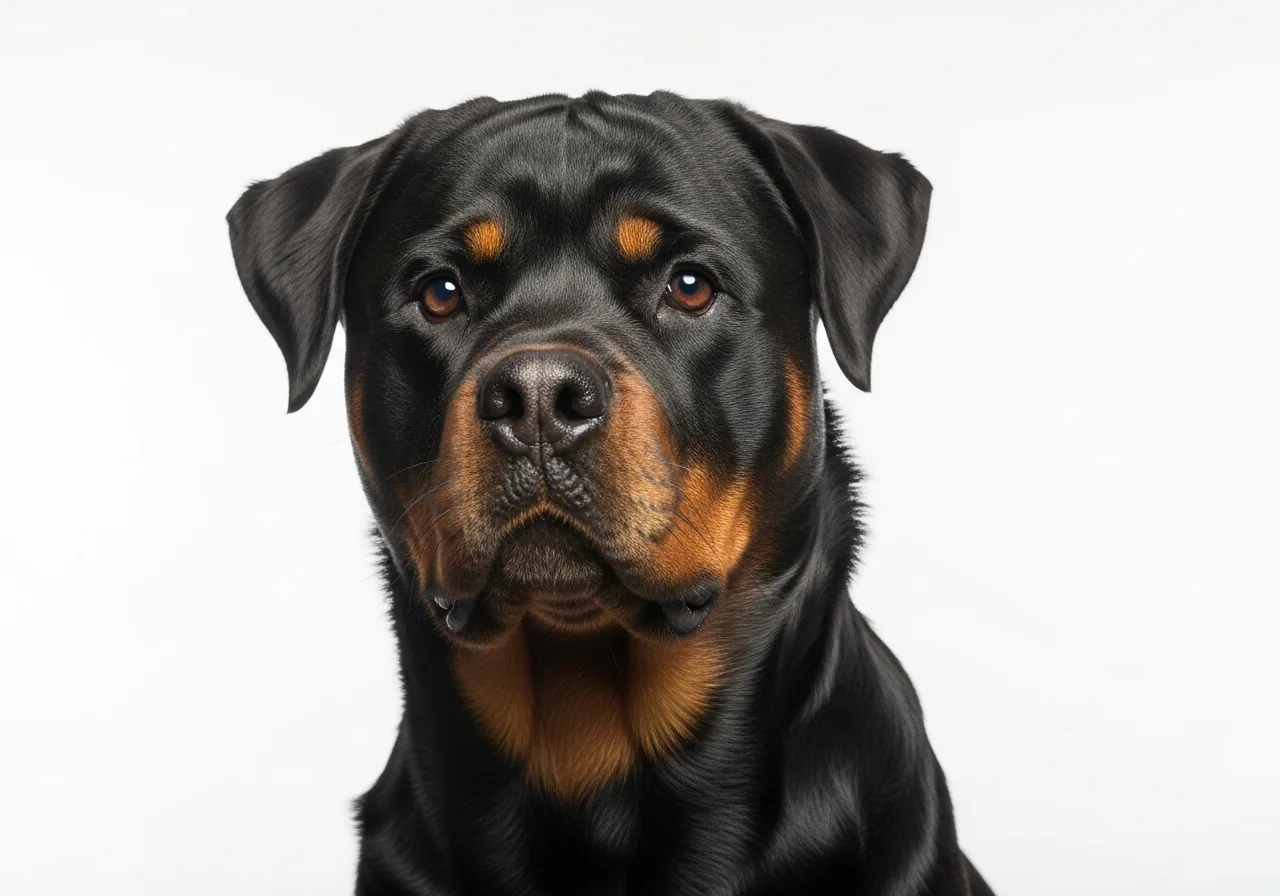
Rottweiler
#7 Most PopularLast updated
A calm, powerful guardian that is devoted to its family and needs early training, socialization, and a confident owner.
Is the Rottweiler Right For You?
YES, if you are…
Confident, consistent owners who want a loyal guardian and companion and will invest in socialization, training, and daily exercise. Suits experienced owners and committed first-timers who work with a good trainer.
NO, if you are…
People who want a dog that greets every stranger like a friend, households unable to commit to ongoing training, renters with breed restrictions, and owners who cannot physically manage a large, strong dog.
Fun Facts about the Rottweiler
- Butchers in Rottweil reportedly tied money pouches around their dogs' necks on the way home from market to keep the cash safe from thieves.
- In 1910, Rottweilers were officially recognized as police dogs in Germany.
- The breed's name comes from the town of Rottweil, one of the oldest towns in the German state of Baden-Württemberg.
- Rottweilers were among the breeds used as messenger, ambulance, and guard dogs during World War I.
Common Misconceptions about the Rottweiler
That Rottweilers are inherently aggressive. A well-bred, well-socialized Rottweiler is calm, confident, and good-natured, while reserved with strangers. Problems usually come from poor breeding, lack of socialization, or being kept as a yard guard without training. Another myth is that tough handling is needed; Rotties respond best to clear, fair, reward-based training.
Quick Facts
80-135 lbs
22-27 in
9-10 years
Short
Black and Mahogany, Black and Rust
Moderate
High
Easy
Occasional
No
Rottweiler Temperament
Loyal, Loving, Confident Guardian
Exercise & Grooming
Exercise Needs
60+ minutes daily including mental stimulation
Grooming
Weekly brushing
Grooming Guide
Brush the short double coat weekly with a rubber curry or bristle brush, more often during seasonal shedding. Trim nails regularly (a large dog's long nails affect posture), clean ears, and brush teeth several times a week. Bathe as needed.
Rottweiler Health
Common Health Issues
Hip dysplasia, osteosarcoma, heart conditions
Diet & Nutrition
Feed a large-breed diet with measured portions, and use a large-breed puppy formula until growth finishes, which can take up to two years. Keeping a Rottweiler slim protects its hips, elbows, and knees. Split food into two meals a day to reduce bloat risk.
Health Care
Ask for OFA hip and elbow results, a cardiac exam (subvalvular aortic stenosis occurs in the breed), and an eye exam on both parents, plus a DNA test for juvenile laryngeal paralysis and polyneuropathy (JLPP). Osteosarcoma (bone cancer) is more common in Rottweilers than most breeds; lameness that does not improve, especially in a middle-aged dog, should be checked promptly. Cruciate ligament tears are common in big, active dogs, and keeping your Rottweiler lean reduces the risk. Bloat is also possible, so learn the warning signs. Rottweilers can be prone to weight gain, which adds stress to their joints.
About the Rottweiler
History
Rottweilers descend from the Roman cattle-driving mastiffs that accompanied the legions across the Alps. When the Romans established a settlement at what is now Rottweil, in the German state of Baden-Württemberg, their drover dogs interbred with local stock. For centuries afterward, Rottweil's butchers used the dogs to drive cattle to market and pull carts of meat, earning them the name Rottweiler Metzgerhund, the butcher's dog of Rottweil. The rise of railways in the 1800s nearly ended the breed, since cattle no longer needed driving. Police and military work in the early 20th century revived it. A first breed standard was written in 1901, the German breed club ADRK was founded in 1921, and the AKC recognized the Rottweiler in 1931.
Personality
Rottweilers are confident, deliberate, and confidently affectionate with their people in a way that often surprises owners expecting a one-dimensional guard dog. A well-raised Rottweiler is calm in the house, watchful at the door, playful with familiar children, and distinctly unimpressed by everyday novelty, they reserve reaction for situations that genuinely warrant it. This is a breed that thinks. Rottweilers do not respond well to repetition for its own sake, and harsh corrections from someone they have not learned to trust will shut them down or, in poorly socialized lines, escalate. They want a fair handler and a clear job, and given both they are among the most rewarding breeds to train. With strangers they are reserved by default. That reserve is not the same as aggression, but it does mean a Rottweiler needs deliberate, ongoing socialization from puppyhood through their second year. They are physically powerful enough that mistakes carry consequences, which is why responsible Rottweiler ownership is genuinely a higher bar than average dog ownership.
Living With a Rottweiler
Rottweilers are loyal, affectionate with their families, and naturally watchful with strangers. They often lean against their people and follow them around the house. Their size and strength mean everyday manners, such as not jumping, walking nicely, and settling when visitors arrive, are essential. They need daily exercise and a job for their minds, such as obedience, tracking, or carting. A securely fenced yard is important. Be aware that some landlords, homeowners' associations, and insurers restrict the breed, so check before you commit. Rotties tend to be quiet indoors and are not big barkers, but they will alert you to anything unusual.
Training
Rottweilers are intelligent and eager to work with a fair, consistent handler. Use reward-based training and clear rules; harsh methods can create conflict with a powerful dog. Socialize widely and early with people, dogs, and places so that natural protectiveness stays balanced. Group classes are valuable. Many Rotties excel in obedience, rally, tracking, herding, and carting.
Frequently Asked Questions about the Rottweiler
Are Rottweilers aggressive?
Not by nature. They are protective and naturally reserved with strangers, so early socialization and training are essential. Well-bred, well-raised Rottweilers are calm and steady.
Are Rottweilers good with children?
Many Rottweilers are affectionate and patient with children in their own family. Because of their size and strength, always supervise young children and teach both the dog and kids good manners.
How much exercise does a Rottweiler need?
About an hour or more a day of walks, play, and training. Mental work like obedience or scent games is as important as physical exercise.
Do Rottweilers shed?
Yes, moderately. Their short double coat sheds year-round and more in spring and fall. Weekly brushing is usually enough.
Are Rottweilers good for first-time owners?
They can be, if you commit to training classes, socialization, and consistent rules from day one. They are a better fit for confident owners than for people who want a low-effort dog.
How long do Rottweilers live?
Most live 9 to 10 years. Keeping them lean and watching for lameness, a possible sign of bone cancer, are important parts of their care.
Related Breeds




Recommended Products for Large Dogs
4-Legger Organic Hypoallergenic Shampoo
USDA-certified organic dog shampoo with aloe and lemongrass. Free of synthetic detergents, parabens, and artificial fragrance.
Big Barker Orthopedic Dog Bed
10-year warranty orthopedic bed engineered for large and giant breeds. Made in the USA from CertiPUR-US-certified foam that won't flatten.
Bocce's Bakery Training Treats
Limited-ingredient, soft training treats baked in Brooklyn with whole foods like peanut butter, banana, and oatmeal — no preservatives.
Earth Rated Compostable Poop Bags
USDA-certified plant-based, home-compostable poop bags. Leak-proof, lavender-scented or unscented options.
Found My Animal Rope Leash
Hand-spliced cotton rope leash made in Brooklyn, NY. A portion of every sale funds shelter and rescue partners.
Open Farm Grass-Fed Beef Recipe
Pasture-raised beef recipe with humanely-sourced meat, non-GMO produce, and traceable ingredients you can look up by lot number.