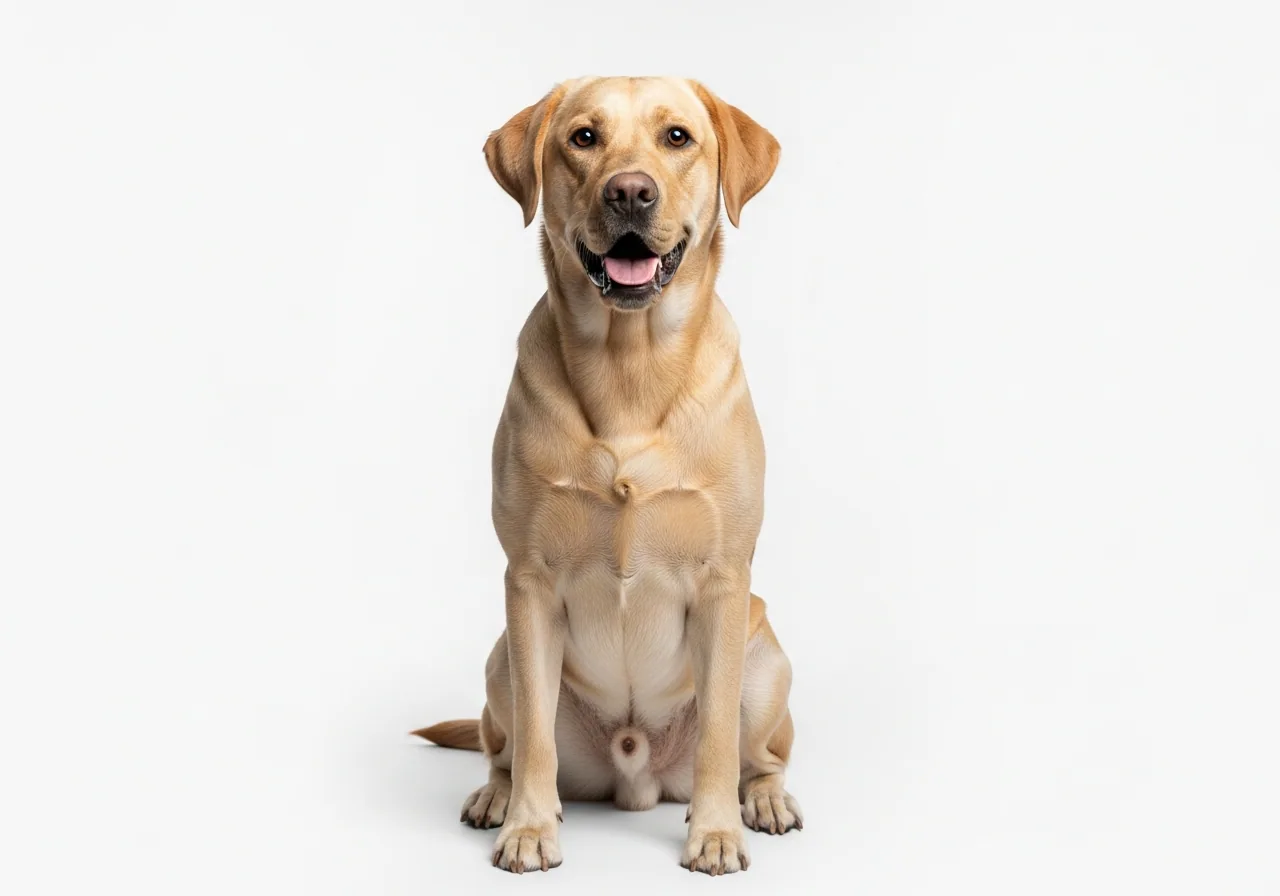
Labrador Retriever
#1 Most PopularLast updated
A water dog turned family dog: endlessly willing, food-obsessed, and happiest with a job and a crowd.
Is the Labrador Retriever Right For You?
YES, if you are…
Active families and individuals who want a social, trainable dog and will include it in daily life: walks, hikes, swimming, and plenty of company. First-time owners do well with Labs if they commit to training and exercise from day one.
NO, if you are…
People who want a calm dog right away (Labs stay puppyish for two to three years), anyone gone 10 hours a day with no help, very house-proud owners who hate dog hair, and homes where food and trash can't be kept out of reach.
Fun Facts about the Labrador Retriever
- The Labrador was the AKC's most registered breed for 31 straight years, from 1991 to 2021.
- Labs have a thick, tapering 'otter tail' that they use like a rudder when swimming.
- Researchers found that many Labs carry a POMC gene mutation tied to hunger, which helps explain the breed's famous appetite.
- Labradors are one of the most widely used breeds for guide dog programs around the world.
Common Misconceptions about the Labrador Retriever
The idea that a Lab is automatically a calm family dog. Young Labs are boisterous, mouthy, and strong, and many end up in shelters at 9 to 18 months because nobody planned for that stage. Another myth is that chocolate and yellow Labs differ in temperament; coat color says little about behavior, while working field lines versus show lines say a lot. Field-bred Labs tend to be leaner and more driven, show-bred Labs stockier and often mellower.
Quick Facts
55-80 lbs
21.5-24.5 in
11-13 years
Short
Yellow, Black, Chocolate
High
High
Easy
Occasional
No
Labrador Retriever Temperament
Friendly, Active, Outgoing
Exercise & Grooming
Exercise Needs
60+ minutes daily of vigorous exercise
Grooming
Weekly brushing, more during shedding season
Grooming Guide
The short double coat is easy to care for but sheds steadily all year and heavily twice a year. A rubber curry brush or deshedding tool once or twice a week keeps hair under control; daily during the spring and fall blowouts. Bathe only when dirty, and rinse off salt or chlorine after swims. Dry the ears after water, trim nails every few weeks, and brush teeth several times a week.
Labrador Retriever Health
Common Health Issues
Hip dysplasia, elbow dysplasia, eye conditions
Diet & Nutrition
Feed a complete diet for large breeds and measure every meal; Labs rarely self-regulate. Large-breed puppy food keeps growth steady and protects developing joints. You should be able to feel the ribs easily and see a waist from above; if you can't, cut back by about 10% and recheck in a month. Count treats as part of the day's food, and use a slow-feeder bowl for dogs that inhale meals. Working field Labs in hunting season need more food than the same dog in summer.
Health Care
Ask any breeder for OFA hip and elbow results and a current eye exam on both parents, plus DNA results for exercise-induced collapse (EIC), progressive retinal atrophy (prcd-PRA), and centronuclear myopathy (CNM). EIC shows up in otherwise fit young Labs that wobble or collapse after intense retrieving; affected dogs can live normally once their owners know to avoid that kind of frenzy. Obesity is the biggest everyday health risk. Many Labs carry a POMC gene variant linked to stronger hunger and lower energy use, which is why the breed is famous for begging. Keeping a Lab lean measurably protects its joints and extends its life. Watch older dogs for lipomas (usually harmless fatty lumps, but have new lumps checked) and for laryngeal paralysis, which shows up as noisy breathing and tiring quickly in heat. Ear infections are common after swimming, so dry the ears afterward.
About the Labrador Retriever
History
Despite the name, the Labrador Retriever did not develop in Labrador but on the island of Newfoundland in the 1500s and 1600s, descended from the now-extinct St. John's Water Dog. Local fishermen used the dogs to haul in nets and retrieve fish that escaped lines, and the breed's webbed feet, water-resistant double coat, and otter-like tail all trace to that working role. English nobles visiting Newfoundland in the early 1800s brought the dogs back to Britain, where the Earls of Malmesbury and the Dukes of Buccleuch refined them as gun dogs. The Kennel Club recognized the breed in 1903 and the AKC in 1917. The Labrador was the most registered breed in the United States every year from 1991 until 2022, when the French Bulldog overtook it.
Personality
The Labrador Retriever is the rare breed that earns its reputation honestly. Bred from Newfoundland water dogs to retrieve cold-water nets and ducks, the Lab carries an enthusiasm for life that does not dim with age, eight-year-olds still belly-flop into ponds with the same conviction as eight-month-olds. Labs are biddable, but their biddability is fueled by appetite and partnership rather than blind obedience. They want to do the thing with you. That makes them outstanding service dogs, search-and-rescue dogs, and detection dogs, but it also explains why a bored, lonely Lab is a destructive Lab. They eat shoes, drywall, and entire bags of birdseed when their brains are not occupied. Socially they are almost indiscriminately friendly, most Labs greet strangers as long-lost relatives. That openness is part of why they make poor guard dogs but exceptional family companions. With children they are patient and self-correcting, and with other dogs they are usually appeasing rather than confrontational. The cost of all that sociability is separation anxiety; Labs do not thrive when left alone for long stretches.
Living With a Labrador Retriever
A Lab is a big, strong, enthusiastic dog that wants to be in the middle of everything. Expect one to follow you room to room, greet every visitor as a long-lost friend, and treat the kitchen as its office. Counter-surfing and trash-raiding are near-universal, so a Lab household learns to close the pantry and put the bin behind a door. Puppies and adolescents are destructive chewers until about two years old; durable chew toys and a crate are survival tools, not optional extras. Most Labs love water and will find every puddle on a walk. A fenced yard helps, but the yard is not exercise: Labs left alone outside get bored and dig, and they do far better with walks, fetch, swimming, and time with their people.
Training
Labs are among the easiest breeds to train because they are food-driven and want to work with you. That food drive is your best tool: short sessions paid in kibble from the daily ration teach a lot without adding calories. The hard parts are impulse control and manners at size: jumping on people, pulling on the leash, and grabbing things off counters. Teach a solid 'sit to greet', loose-leash walking, and 'leave it' early, before your puppy weighs 70 pounds. Retrieving games are a natural reward, and many Labs excel at dock diving, field work, and therapy-dog work once they have the basics.
Frequently Asked Questions about the Labrador Retriever
Are Labrador Retrievers good family dogs?
Yes, Labs are one of the best-known family breeds: friendly, tolerant, and eager to please. The catch is size and energy. A young Lab can knock over a toddler by accident, so supervise early interactions and invest in training before your puppy is full grown.
Why is my Lab always hungry?
Many Labs carry a variant of the POMC gene that affects appetite and energy use, so they genuinely feel hungrier than other dogs. Measure meals, count treats, and use food-puzzle toys rather than giving in to begging. A lean Lab lives longer and has fewer joint problems.
How much exercise does a Labrador need?
Most adult Labs need at least an hour of real exercise a day, such as brisk walks, fetch, or swimming, plus some training or puzzle work. Field-bred Labs often need more. A Lab without enough exercise usually finds its own entertainment, typically chewing or digging.
Do Labradors shed a lot?
Yes. Labs have a dense double coat that sheds year-round and blows out heavily in spring and fall. Brushing once or twice a week, and daily during heavy shedding, keeps it manageable, but expect hair on clothes and floors.
What is the difference between English and American Labs?
They are the same breed. 'English' usually means show-line Labs, which are stockier with broader heads and often calmer. 'American' usually means field-line Labs, which are taller, leaner, and higher drive. Choose based on the energy level you can live with.
How long do Labrador Retrievers live?
Most Labs live 11 to 13 years. Keeping them lean is the single biggest thing owners can do; a well-known lifelong study found Labs fed to stay slim lived about two years longer than their littermates.
Related Breeds



Recommended Products for Large Dogs
4-Legger Organic Hypoallergenic Shampoo
USDA-certified organic dog shampoo with aloe and lemongrass. Free of synthetic detergents, parabens, and artificial fragrance.
Big Barker Orthopedic Dog Bed
10-year warranty orthopedic bed engineered for large and giant breeds. Made in the USA from CertiPUR-US-certified foam that won't flatten.
Bocce's Bakery Training Treats
Limited-ingredient, soft training treats baked in Brooklyn with whole foods like peanut butter, banana, and oatmeal — no preservatives.
Earth Rated Compostable Poop Bags
USDA-certified plant-based, home-compostable poop bags. Leak-proof, lavender-scented or unscented options.
Found My Animal Rope Leash
Hand-spliced cotton rope leash made in Brooklyn, NY. A portion of every sale funds shelter and rescue partners.
Open Farm Grass-Fed Beef Recipe
Pasture-raised beef recipe with humanely-sourced meat, non-GMO produce, and traceable ingredients you can look up by lot number.