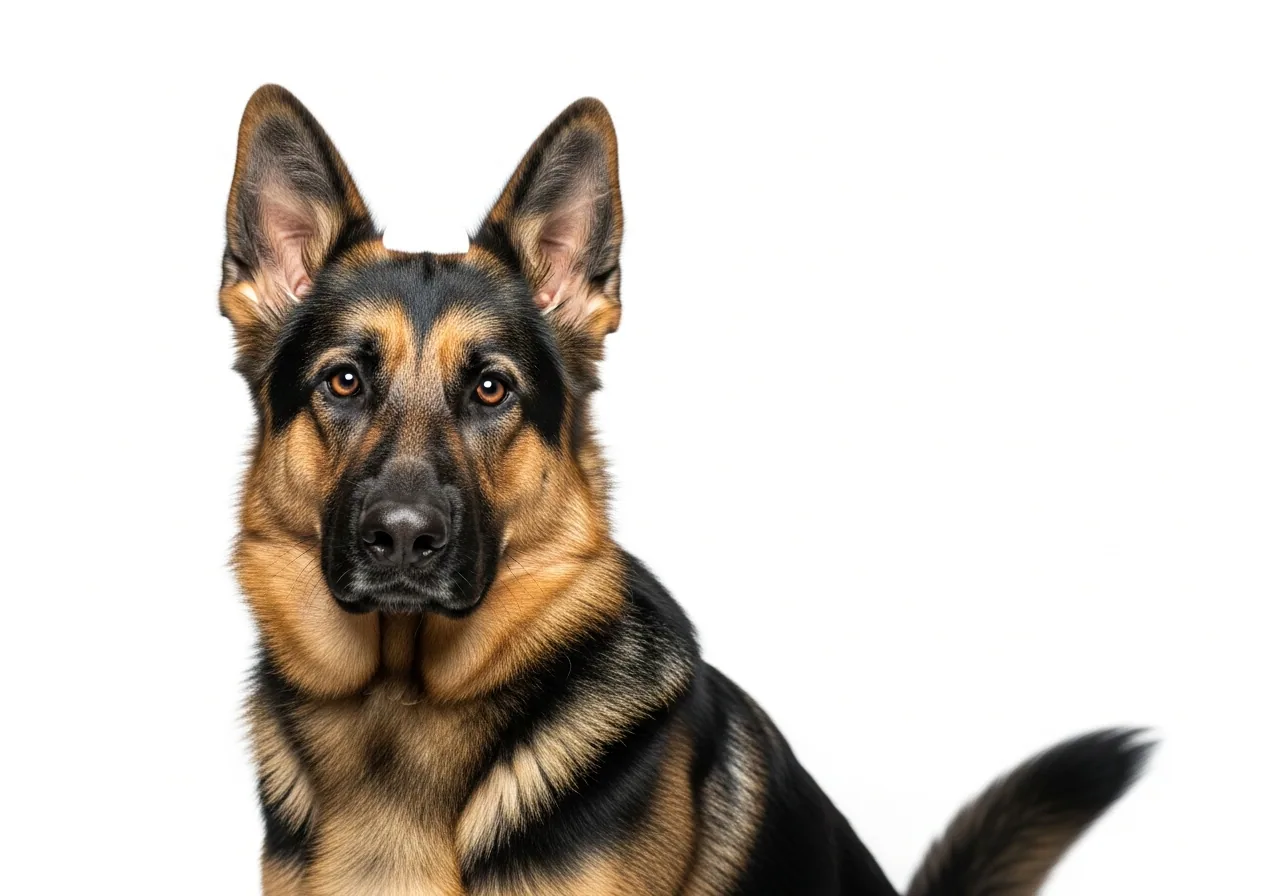
German Shepherd Dog
#4 Most PopularLast updated
A loyal, intelligent working dog that bonds deeply and needs a real job, firm structure, and plenty of brushing.
Is the German Shepherd Dog Right For You?
YES, if you are…
Experienced or committed owners who want a loyal, trainable partner and can provide daily exercise, training, and leadership. Great for active households, dog-sport enthusiasts, and people who want a capable watchdog.
NO, if you are…
Owners who are away most of the day, people who dislike shedding, households unable to commit to socialization and ongoing training, and anyone wanting a low-energy dog.
Fun Facts about the German Shepherd Dog
- Founder Max von Stephanitz's motto for the breed was 'Utility and intelligence.'
- Rin Tin Tin, a German Shepherd rescued from a World War I battlefield, starred in more than two dozen Hollywood films.
- After World War I, the breed was renamed 'Alsatian Wolf Dog' in Britain to avoid anti-German sentiment.
- German Shepherds were among the first dogs trained as guide dogs for the blind.
Common Misconceptions about the German Shepherd Dog
That German Shepherds are naturally aggressive. Well-bred, well-socialized GSDs are confident and discerning, not reactive. Another myth is that the sloped back seen in some show dogs is correct or healthy; extreme angulation is controversial within the breed, and many breeders favor a straighter, more functional topline.
Quick Facts
50-90 lbs
22-26 in
7-10 years
Double
Black and Tan, Sable, All Black
Very High
High
Easy
Frequent
No
German Shepherd Dog Temperament
Confident, Courageous, Smart
Exercise & Grooming
Exercise Needs
90+ minutes of vigorous daily exercise
Grooming
Brushing 3-4 times per week
Grooming Guide
Brush three to four times a week with an undercoat rake and slicker brush, and daily during the twice-yearly coat blow. Do not shave the coat; it protects against both heat and cold. Bathe occasionally, trim nails regularly (many GSDs dislike it, so start young), and check ears weekly.
German Shepherd Dog Health
Common Health Issues
Hip dysplasia, degenerative myelopathy, bloat
Diet & Nutrition
Feed a complete large-breed diet, measured. Large-breed puppy food supports steady growth. To lower bloat risk, feed two or more smaller meals a day rather than one large one, and avoid intense exercise right before and after eating. Ongoing digestive upset or weight loss can be a sign of EPI and should be checked by a vet.
Health Care
Ask for OFA or PennHIP hip and elbow evaluations on both parents; dysplasia is common in the breed. A DNA test for degenerative myelopathy (DM), a progressive spinal disease that causes hind-end weakness in older dogs, is also widely available. Bloat (gastric dilatation-volvulus) is a risk for this deep-chested breed: know the signs (swollen belly, retching without producing anything, restlessness) and ask your vet about a preventive gastropexy during spay or neuter. Other conditions seen in GSDs include exocrine pancreatic insufficiency (weight loss despite eating, pale bulky stools), perianal fistulas, allergies, and hemangiosarcoma. Young Shepherds can have growing pains called panosteitis, causing limping that shifts between legs.
About the German Shepherd Dog
History
Captain Max von Stephanitz founded the German Shepherd in 1899 with a single goal: to standardize the best of Germany's regional herding dogs into a versatile working breed. At a dog show in Karlsruhe he bought a wolf-like working dog he renamed Horand von Grafrath, registered him as the first German Shepherd, and built the modern breed from his descendants. Von Stephanitz pivoted the breed toward police and military work as German agriculture industrialized, and within twenty years GSDs were serving in both World Wars as messengers, sentries, and casualty searchers. American soldiers brought them home, where the breed's screen appearances, Strongheart, Rin Tin Tin, cemented its global popularity. The AKC has recognized the breed since 1908.
Personality
The German Shepherd Dog is, behaviorally, two dogs in one body. With its family the GSD is profoundly affectionate, almost dependent, a breed that does not just like being near its people, it requires it. With outsiders the same dog is reserved at best, suspicious by default, and capable of decisive protective action when it judges the situation warrants. This duality is a feature, not a bug. It is why the breed dominates police, military, and protection work worldwide. It is also why a GSD raised without rigorous, ongoing socialization can drift into reactivity and fear-based aggression, the same intensity that makes them excellent guardians makes them excellent worriers. Mentally they are among the most trainable dogs ever bred, but that intelligence is restless. A GSD without a job will invent one, and the job they invent is usually 'patrol the house and bark at anything new.' They thrive on structured work, obedience, tracking, herding, protection sport, and on a clear, consistent relationship with a handler they trust.
Living With a German Shepherd Dog
German Shepherds attach strongly to their family and want to be involved in everything, which also makes them prone to separation stress if left alone for long hours. They are natural watchdogs and will announce visitors; that protectiveness needs to be guided with training, not encouraged. Expect a lot of hair: GSDs shed constantly and blow their undercoat twice a year. They need daily physical exercise and, just as importantly, mental work such as training, tracking, or puzzle games. An under-exercised Shepherd may pace, chew, bark, or become overly reactive. A securely fenced yard helps, as do clear house rules that everyone follows.
Training
GSDs learn fast and thrive with clear, consistent training. Reward-based methods work very well; heavy-handed corrections tend to create anxiety or defensiveness. Early, broad socialization is essential so that natural wariness of strangers does not become fear or aggression. Give them a job: obedience, tracking, herding, nosework, or protection sports with a qualified club. Working-line dogs in particular need daily structured work.
Frequently Asked Questions about the German Shepherd Dog
Are German Shepherds aggressive?
Not by nature. They are protective and reserved with strangers, which can turn into fear or aggression if a dog is poorly bred or under-socialized. Early socialization, training, and a stable breeding background produce confident, friendly dogs.
Are German Shepherds good with kids?
Well-socialized GSDs are often devoted, gentle family dogs. Their size and energy mean supervision with small children is important, and kids should learn to respect the dog's space.
How much do German Shepherds shed?
A lot. The double coat sheds every day and blows out heavily twice a year. Frequent brushing and a good vacuum are part of life with a Shepherd.
What is the difference between working and show line German Shepherds?
Working lines are bred for drive and performance in police, protection, and sport work; they tend to have more energy and a straighter back. Show lines are bred for appearance and are often calmer, with more angulation. Both need training and exercise.
How much exercise does a German Shepherd need?
Plan on 90 minutes or more of activity a day, mixing physical exercise with training or scent work. Mental exercise matters as much as running for this breed.
Can German Shepherds be left alone?
Adult GSDs can manage a few hours alone if they are well exercised and crate- or room-trained, but long daily absences often lead to anxiety and destructive behavior. They are best for homes where someone is around for much of the day.
Related Breeds
Recommended Products for Large Dogs
4-Legger Organic Hypoallergenic Shampoo
USDA-certified organic dog shampoo with aloe and lemongrass. Free of synthetic detergents, parabens, and artificial fragrance.
Big Barker Orthopedic Dog Bed
10-year warranty orthopedic bed engineered for large and giant breeds. Made in the USA from CertiPUR-US-certified foam that won't flatten.
Bocce's Bakery Training Treats
Limited-ingredient, soft training treats baked in Brooklyn with whole foods like peanut butter, banana, and oatmeal — no preservatives.
Earth Rated Compostable Poop Bags
USDA-certified plant-based, home-compostable poop bags. Leak-proof, lavender-scented or unscented options.
Found My Animal Rope Leash
Hand-spliced cotton rope leash made in Brooklyn, NY. A portion of every sale funds shelter and rescue partners.
Open Farm Grass-Fed Beef Recipe
Pasture-raised beef recipe with humanely-sourced meat, non-GMO produce, and traceable ingredients you can look up by lot number.